

Best Tobacco Flavored Vape Buying Guide
You're an adult smoker ready to move away from cigarettes, but every vape labeled tobacco seems to taste different. One may be dry and earthy, another may finish with vanilla or caramel, and a third may feel much harsher than expected. The right choice isn't determined by the flavor name alone. Tobacco character, nicotine concentration, airflow, device power, and legal status all shape the experience.
This guide takes a practical approach to finding the best tobacco flavored vape for your preferences. You'll learn how to identify flavor notes, match nicotine strength to throat sensation, compare disposable and rechargeable formats, check regulatory details, and use a device without overheating its coil.
Table of Contents
- Finding Your Ideal Tobacco Vape Profile
- Decoding Tobacco Flavor Notes and Variations
- Tobacco-Flavored Vape Options: Comparing Different Styles
- How Nicotine Strength Alters the Vaping Experience
- Evaluating Device Categories and Selection Criteria
- Navigating Legal Status and Market Realities
- Best Practices for Device Care and Safe Usage
- Making Your Final Selection at Pink Smoke Shop
Finding Your Ideal Tobacco Vape Profile
An adult smoker often starts with a simple goal: find a vape that feels familiar enough to make cigarettes less appealing. That search can become frustrating when the first tobacco flavor tastes sweet, perfumed, or strangely thin. A product name such as “Classic Tobacco” tells you very little about whether the liquid will taste dry, woody, mellow, or dessert-like.
A better starting point is your existing taste preference. Someone accustomed to a dry cigarette may prefer a straightforward tobacco profile with earthy and slightly nutty notes. Someone who enjoys pipe tobacco may want warmth and restrained sweetness. A person who values convenience may care more about a rechargeable high-puff device, a clear battery indicator, or a compact pod than about subtle differences between tobacco blends.
Practical rule: Choose the flavor family first, then use nicotine strength and hardware to fine-tune the draw.
The guide to disposable vape flavors can help you compare broader flavor categories, but tobacco deserves its own evaluation. The word “tobacco” may describe a clean leaf-inspired blend, a caramelized RY4-style mixture, or a profile with mint on the finish. Those options suit different routines and palates.
Start by deciding what you want the vape to do for you:
- Recreate a dry cigarette impression: Look for classic, earthy, unsweetened wording.
- Add warmth without tasting like candy: Consider cured, nutty, woody, or lightly sweet descriptions.
- Make the transition more approachable: A tobacco blend with vanilla, honey, or caramel may feel smoother, though it won't resemble a plain cigarette as closely.
- Keep the routine simple: Compare pod and disposable formats, charging requirements, controls, and display features before buying.
The strongest choice is the one you'll use consistently and understand clearly. Don't treat a bold flavor label as proof of quality, and don't assume a tobacco flavor is automatically lower in nicotine or less demanding on the device.
Decoding Tobacco Flavor Notes and Variations
Tobacco e-liquid isn't one flavor. It's a broad category built around different interpretations of cured leaf, cigarette paper, pipe tobacco, cigar depth, and sweetened blends. Reading the descriptive words on a product page helps you predict the experience before you buy.
Tobacco-Flavored Vape Options: Comparing Different Styles
Tobacco-flavored vapes are not all designed to deliver the same flavor profile or device experience. Some focus on traditional tobacco notes, while others combine tobacco with mint, nutty, or richer flavor characteristics. Device capacity and available features also vary significantly between models.
Classic and Traditional Tobacco Options
For those comparing traditional tobacco flavors, the HQD GO 35K Tobacco, HQD Glaze 15K Tobacco, RAZ LTX 25K Tobacco, and Lost Mary MT35000 Turbo Classic Tobacco offer different device formats and advertised puff capacities.
The HQD GO 35K advertises up to 35,000 puffs and includes adjustable operating modes, while the HQD Glaze offers an advertised capacity of 15,000 puffs. The RAZ LTX 25K lists up to 25,000 puffs in Normal Mode and 15,000 in Boost Mode. The Lost Mary MT35000 Turbo provides another classic tobacco-labeled option in the higher-capacity category.
These advertised puff counts are estimates rather than guaranteed usage totals.
Virginia and Cuban Tobacco Variations
The HQD GO 35K Virginia Tobacco offers an alternative to the standard Tobacco-labeled version within the same device lineup.
For readers interested in Cuban Tobacco flavor profiles, two other options are the Fume Infinity Cuban Tobacco, advertised at up to 4,500 puffs, and the Fume Extra Cuban Tobacco, advertised at up to 1,500 puffs.
The main differences to consider are the flavor descriptions, device formats, and advertised capacities rather than assuming that every tobacco-labeled product tastes alike.
Mint and Nutty Tobacco Alternatives
Tobacco flavors can also incorporate additional flavor notes.
The HQD Cuvie Plus 2.0 Mint Tobacco combines a tobacco-labeled flavor with mint and advertises up to 9,000 puffs.
Another distinct option is the HQD V1 300 Puff Disposable Vape – Nuts Tobacco. Each package contains three individual disposable devices, with each device rated for approximately 300 puffs. That equals a combined advertised capacity of 900 puffs across the three devices, not 900 puffs from a single device.
Choosing Between Tobacco-Flavored Devices
When comparing these products, consider the specific flavor variation, nicotine concentration shown on the packaging, device features, and advertised puff capacity.
A higher advertised puff count does not necessarily mean a better flavor experience. The most useful comparison is between products that match the type of tobacco flavor and device format you are looking for.
Classic cigarette profiles
A classic cigarette-style tobacco usually emphasizes a dry, earthy, slightly ashy impression. It may have a restrained sweetness and a direct finish rather than a lingering dessert note. This is the category I'd recommend first for an adult smoker who wants familiarity instead of novelty.
These blends can differ in intensity. One may feel light and grassy, while another may be darker, fuller, and more roasted. Product language such as “rich,” “bold,” “classic,” or “full-bodied” usually points toward a stronger leaf impression, but the final result still depends on the liquid formulation and device output.
Cured and gently sweet profiles
Cured tobacco profiles often bring out warmer notes associated with pipe tobacco or sweetened rolling tobacco. Look for descriptions involving vanilla, caramel, honey, molasses, or amber warmth. These flavors can make a tobacco vape easier to enjoy over a long session, especially if a dry profile feels too stark.
The tradeoff is clear. The more prominent the sweet modifier, the less the product may resemble a traditional cigarette. If your goal is a familiar smoking-style flavor, choose a blend where the tobacco remains the main note and the sweetness stays in the background.
Nutty and woody variations
Nutty and woody tobacco profiles focus on the agricultural character of the leaf. They may suggest walnut, oak, cedar, toasted grain, or a dry roasted finish without tasting like a bakery product. This is a strong direction for customers who find classic tobacco too plain but dislike obvious vanilla or caramel.
Flavor fatigue often comes from choosing a profile that sounds appealing for a few puffs but becomes tiring during daily use. A simple test is to ask whether you want the aftertaste to be dry, warm, sweet, smoky, or clean. That answer is more useful than choosing a product solely because its name includes “tobacco.”
The device also changes the result. Higher output can make darker or sweeter notes more pronounced, while a tighter draw may make a tobacco blend feel more concentrated. Flavor descriptions are a starting point, not a guarantee that two devices using the same name will taste identical.
How Nicotine Strength Alters the Vaping Experience
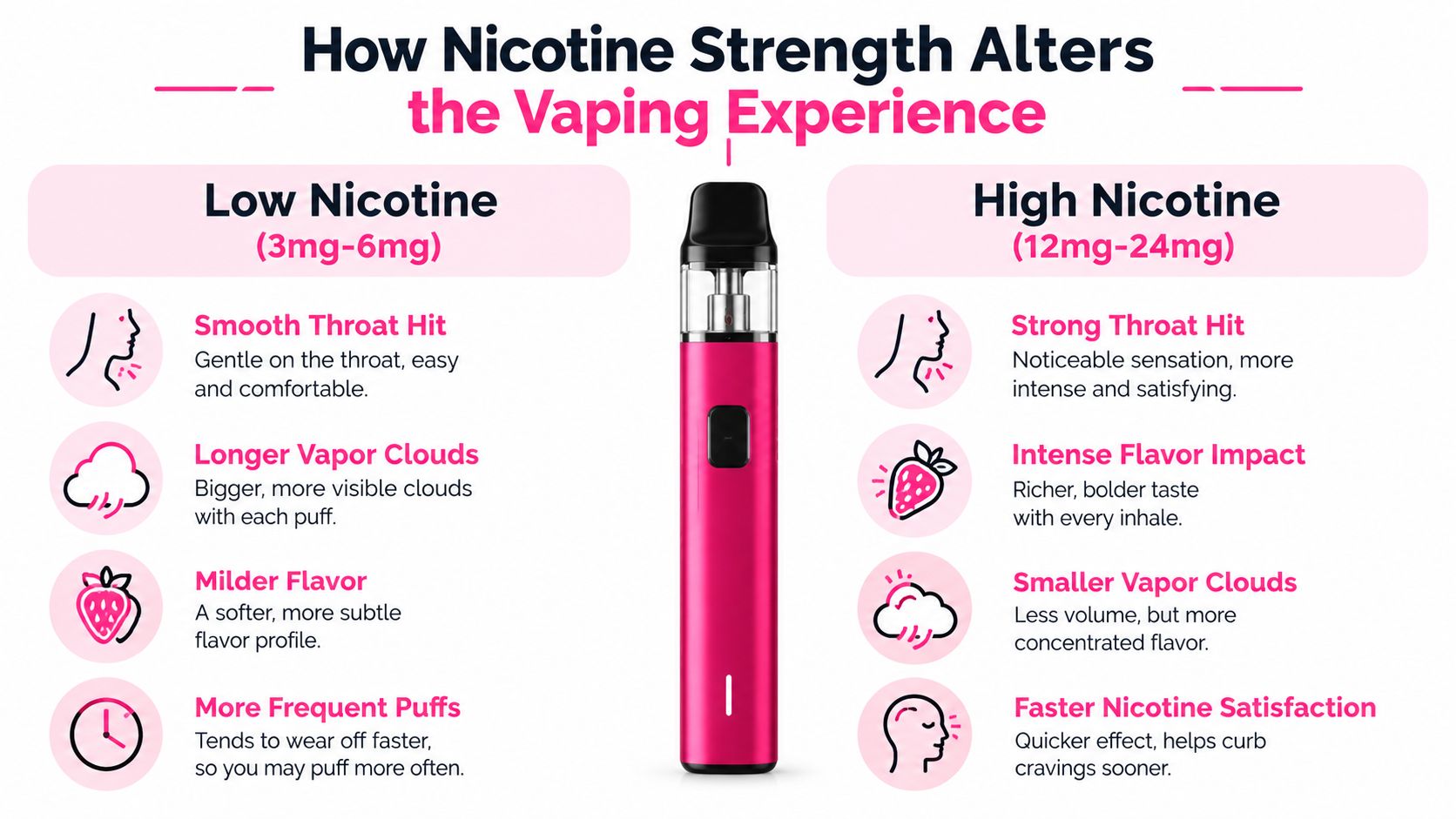
Nicotine concentration changes more than nicotine intake. It also changes the way tobacco vapor feels in the throat and how sharply the flavor arrives. Controlled sensory research found that increasing nicotine raised perceived irritation and bitterness, reduced perceived sweetness, and produced a stronger effect on harshness than changes in flavor concentration. The FDA's e-cigarette overview also notes that e-liquids commonly contain nicotine, flavorings, propylene glycol, and vegetable glycerin.
Comparing common strengths
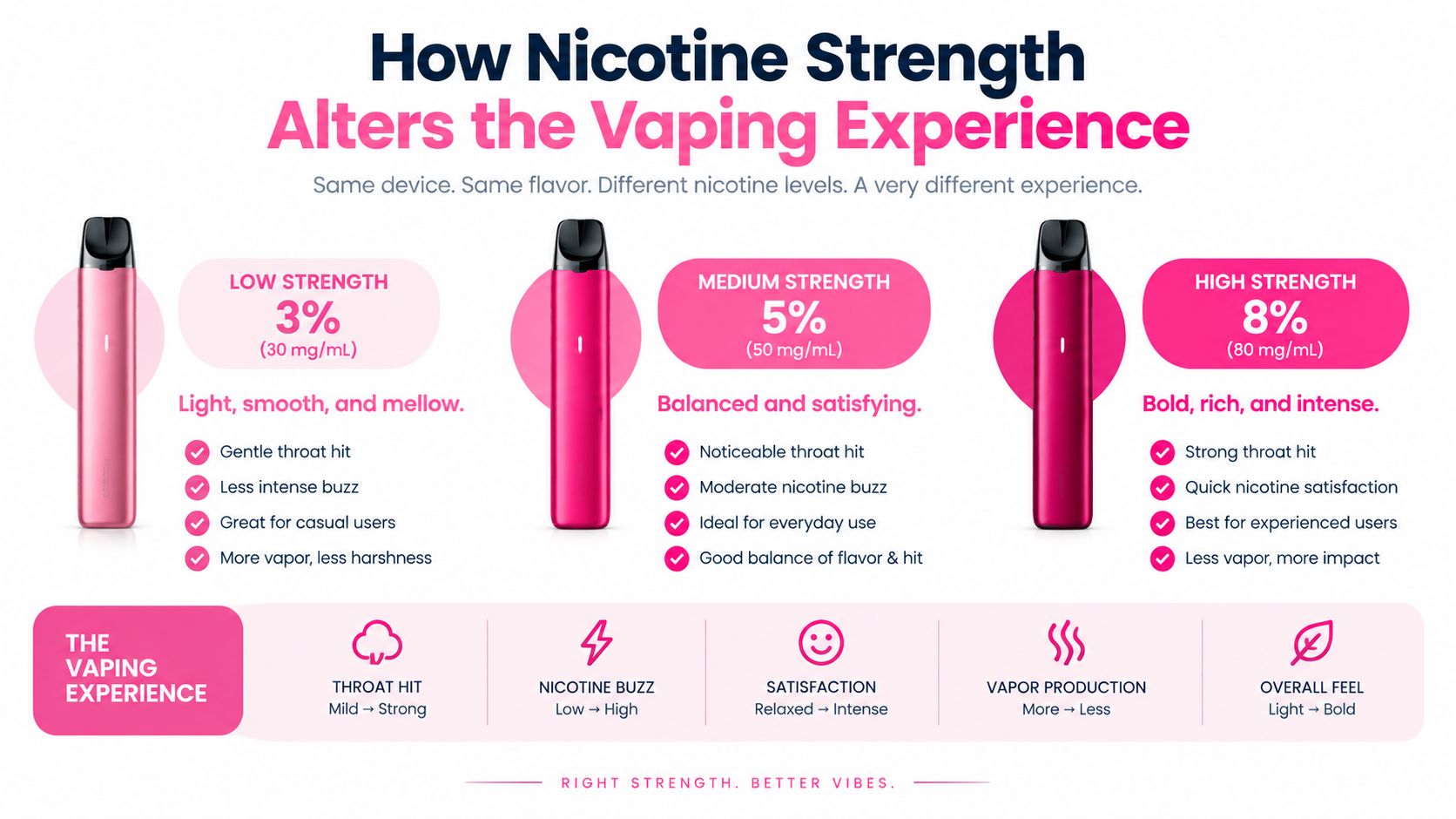
A 0% product contains no nicotine, but it may not provide the same nicotine sensation as a nicotine-containing product. It can suit an adult who specifically wants the flavor and inhalation ritual without nicotine, although the vapor experience still depends on the device and formulation.
A 3% product generally offers a less forceful nicotine sensation than a higher-strength option. For many adult users, it provides a more forgiving tobacco draw, particularly when paired with moderate device output and sensible airflow.
A 5% product produces a more pronounced nicotine presence and may feel sharper in a compact, low-airflow device. Higher concentration can create more throat irritation and bitterness, so it's a poor match for someone who already finds tobacco vapor harsh.
These labels don't predict identical delivery from every device. Actual exposure varies with output, puff duration, airflow, nicotine form, and how frequently the device is used. Check the product label and specifications rather than assuming that the same percentage will feel identical across formats.
Match strength to hardware
A small pod or disposable often delivers a concentrated draw with limited airflow. In that setup, high nicotine can feel intense even when the tobacco flavor itself is mild. A more open, higher-output device may produce a larger volume of aerosol and alter both flavor intensity and throat sensation.
Nicotine strength should support your adult-use goal, not maximize throat hit alone. If the draw feels abrasive, lowering concentration or reducing power is more sensible than searching for a sweeter flavor to cover the harshness. If you're comparing zero-nicotine options, Pink Smoke Shop's zero-nicotine high-puff collection is a relevant place to review available products, with current specifications subject to inventory.
The best tobacco vape pairing is therefore a combination, not a flavor ranking. A dry tobacco profile at a high concentration may feel much harsher than a sweeter tobacco profile at a lower concentration, even if both use similar hardware. Read the nicotine label, identify the device's intended power range, and treat throat comfort as a deciding factor.
Evaluating Device Categories and Selection Criteria
Flavor matters, but hardware determines whether that flavor stays consistent. A tobacco blend can taste clean on the first draw and burnt later if the battery, coil, airflow, or liquid supply isn't suited to the way you use it.
Start with the device format
A standard disposable prioritizes simplicity. It normally arrives ready to use, requires little setup, and suits customers who don't want to refill or replace pods. Its limitation is control. You may have fewer options for airflow, output, charging, or nicotine selection.
A high-puff rechargeable device can offer longer use and more practical battery management, but only if the battery can keep up with the liquid supply. USB-C charging is especially useful when the device contains enough e-liquid to outlast its initial charge. A battery indicator or e-liquid display can also prevent uncertainty during daily use.
Use this matrix to compare the tradeoffs before choosing:
| Device Feature | Standard Disposable | High-Puff Rechargeable |
|---|---|---|
| Setup | Minimal, usually ready to use | Requires charging and basic monitoring |
| Battery management | Limited or unavailable | USB-C charging is commonly important |
| Flavor control | Usually fixed airflow and output | May include modes or adjustable airflow |
| Longevity | Depends on the stated product design | Can continue while liquid remains and the battery is maintained |
| Best fit | Convenience-focused adult users | Users prioritizing extended use and monitoring |
| Main check | Authenticity, label, nicotine strength | Charging method, display, coil design, compatibility |
Look beyond puff claims
Puff counts are product specifications, not guarantees of identical real-world use. Long draws, frequent use, high output, and airflow settings can change how quickly a device consumes liquid and battery power. Compare the advertised capacity and charging design, but don't select a device solely because the puff figure is larger.
Coil design also affects tobacco flavor. Mesh coils can heat liquid evenly, which may help preserve a complex tobacco profile, but the device still needs to be operated within its recommended range. A powerful coil paired with a nearly dry wick is more likely to produce an unpleasant burnt taste.
Check the practical details
Before buying, confirm:
- Battery design: Rechargeable models should specify their charging method and offer a practical way to monitor remaining power.
- Coil and airflow: Look for the intended draw style and recommended operating instructions.
- Nicotine information: Verify whether the product is available in 0%, 3%, 5%, or another labeled strength.
- Compatibility: Replacement pods and batteries must match the specific device family.
- Brand information: Established branding and clear product specifications are preferable to an untraceable listing.
For a clearer comparison of formats, read Pink Smoke Shop's disposable vape kits and replacement pods guide. A tobacco flavor won't compensate for a device that doesn't fit your charging habits, draw preference, or maintenance tolerance.
Navigating Legal Status and Market Realities
Tobacco flavor occupies a distinctive place in U.S. vaping policy, but its regulatory position is frequently misunderstood. Federal enforcement priorities have treated some flavored products differently, yet a tobacco label does not prove that a product is authorized or legally marketable.
The FDA's 2016 deeming rule, effective August 8, 2016, brought electronic nicotine-delivery systems, including e-cigarettes and vape pens, under the Tobacco Control Act. Products already on the market by that date, as well as newer products, generally became subject to premarket tobacco applications, or PMTAs. Manufacturers must demonstrate that marketing a product is appropriate for the protection of public health. The Congressional Research Service summary describes this broader framework and the later flavor-focused enforcement policy.
Why tobacco flavor is treated differently
In January 2020, the FDA announced an enforcement-priority policy targeting unauthorized flavored cartridge-based e-cigarettes, particularly fruit, candy, and mint products, while tobacco-flavored products remained subject to the broader requirement for FDA authorization. That distinction affected enforcement priorities, not the underlying authorization requirement.
The practical conclusion is straightforward. A product marketed as tobacco may still require authorization, and its manufacturer, formulation, device type, and marketing status all matter. Flavor alone can't settle the legal question.
Before purchasing, check:
- Authorization status: The FDA maintains a public list of e-cigarette products that have received marketing granted orders.
- Packaging: FDA retail guidance requires the required health-warning statement on applicable packaging.
- Retail age controls: Federal Tobacco 21 rules apply to electronic nicotine-delivery systems and e-liquids.
- Local restrictions: State and local requirements can differ and may change over time.
The FDA stated in a September 2024 update that 23 e-cigarette devices and tobacco-flavored e-cigarette products had been authorized at that time, as reported in its marketing denial order update. A product receiving a marketing denial order may not be marketed or distributed in the United States, so responsible shoppers should verify current status rather than infer legality from a flavor description.
Best Practices for Device Care and Safe Usage
Tobacco vapor can taste harsh when the device is run outside its intended conditions. Coil temperature, liquid composition, power, airflow, and wick saturation all influence emissions and flavor. In a controlled comparison, flavored aerosols contained approximately 94–139 detected compounds, while 89–99% of aerosol mass consisted of glycerol, propylene glycol, water, and nicotine, as described in this controlled aerosol study.
Prevent dry and burnt draws
Use the device's recommended wattage and don't operate a coil when the liquid supply is nearly empty. The same study notes that overheating can increase carbonyl formation, so a burnt-tasting draw is a signal to stop rather than continue puffing through it.
Follow this routine:
- Check the liquid supply: Don't continue using a pod or device that appears nearly dry.
- Respect the power range: Use the manufacturer's recommended wattage and avoid unnecessary boost settings.
- Replace burnt pods or coils: A persistent burnt taste usually means the coil or wick has been compromised.
- Allow saturation: For a refillable or newly installed pod, give the wick time to absorb liquid before taking a full draw.
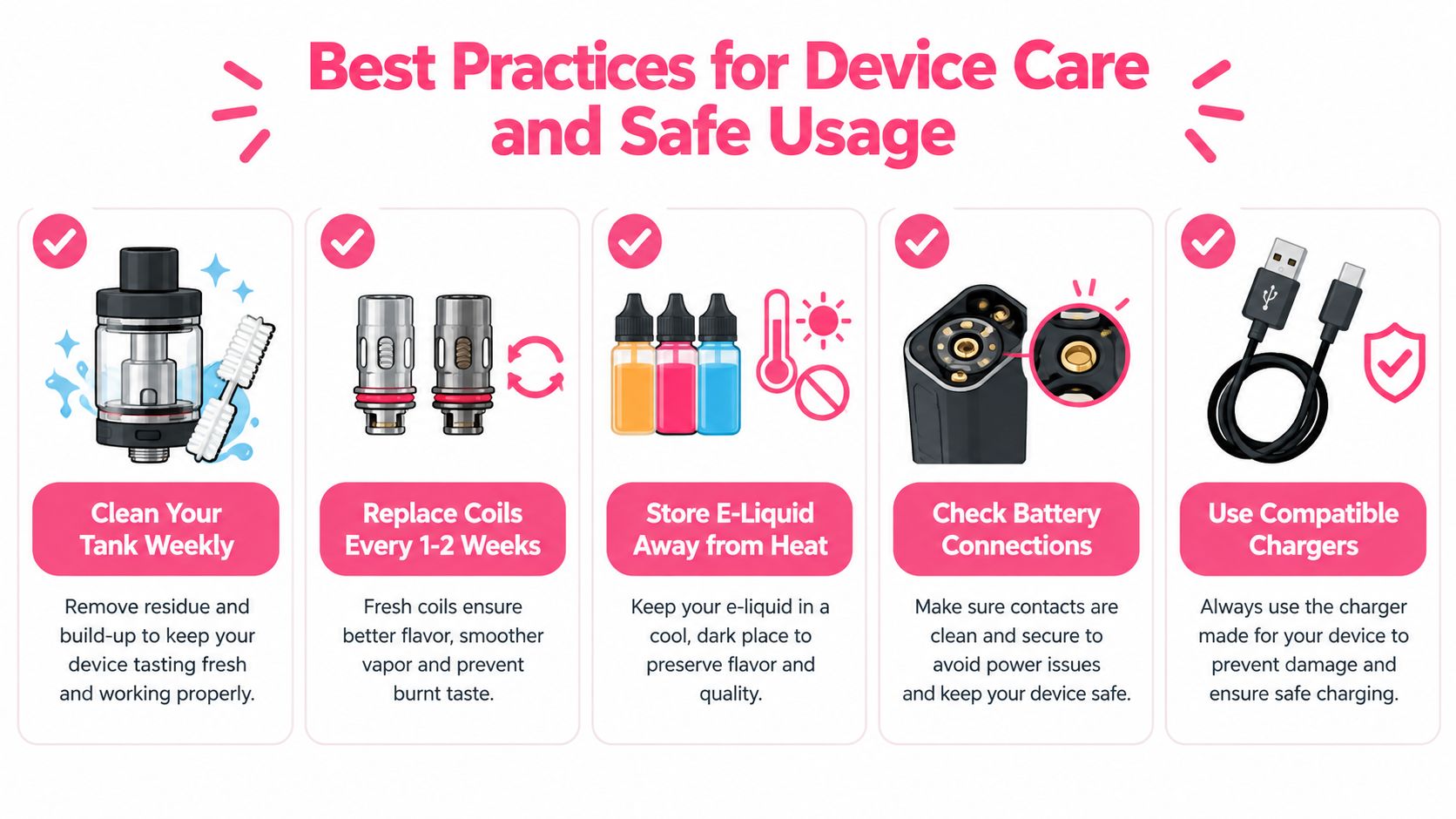
- Use compatible charging equipment: Follow the device instructions and don't improvise with incompatible accessories.
Protect the battery and liquid
Keep rechargeable devices and e-liquid away from excessive heat, direct sunlight, and conditions that can damage the battery or alter the liquid. Store them where children and pets can't access them. Nicotine-containing liquids require particular care because accidental exposure can be dangerous.
Clean removable connections when the manufacturer permits it, and keep charging contacts free of liquid or debris. Don't charge a visibly damaged device. If the battery casing, charging port, or device body appears compromised, replace the device rather than attempting a repair.
A lower-risk comparison with cigarette smoke doesn't make vaping risk-free or make overheating acceptable. Good maintenance is about preserving consistent operation and avoiding preventable problems, not making a safety guarantee.
Making Your Final Selection at Pink Smoke Shop
The best tobacco flavored vape depends on the match between your palate, nicotine preference, and daily routine. For a cigarette-like direction, start with a dry, earthy, unsweetened profile. For a warmer all-day flavor, consider restrained vanilla, caramel, honey, nutty, or woody notes. If you dislike throat irritation, don't solve the problem by choosing a stronger nicotine product. Review the label and consider how the device's airflow and output will affect the draw.
Hardware deserves equal attention. Choose a standard disposable when simplicity matters most, or a rechargeable high-puff format when you want charging, display, or usage monitoring. Confirm the nicotine strength, device specifications, compatibility details, and current availability before placing an order. Inventory, flavor options, prices, and product status can change, so the live product page remains the final reference.
All nicotine and tobacco-related products discussed here are for adults 21 and older in the United States. Age verification may be required, and federal authorization should never be assumed from a tobacco flavor name.
Pink Smoke Shop offers adult customers a range of disposable vapes, pods, high-puff devices, hookah products, and related accessories with product specifications that can be reviewed before purchase. Visit Pink Smoke Shop to compare current tobacco-flavored options, nicotine strengths, device formats, and availability.