

Non Nicotine E Cigs: Ingredients and Use Cases
Most advice about non nicotine e cigs gets one important thing wrong, it treats 0% nicotine as if it automatically means zero concern. A more accurate way to think about these products is simpler, the label tells you about nicotine content, not everything that happens when the device heats liquid and turns it into aerosol.
For adult buyers, that difference matters. A product can be nicotine-free and still depend on coil heat, liquid composition, airflow, and draw style, which means the main buying questions are about label accuracy, hardware quality, and how the device is used, not just the number printed on the package. If you want to browse a category built around that idea, start with the zero nicotine disposable vape collection.
Table of Contents
- The Reality of Zero Nicotine Vaping
- Core Ingredients and Aerosol Chemistry
- Comparing 0% and Nicotine Formulations
- Practical Use Cases for Adult Vapers
- Navigating Labeling Accuracy and Verification
- Legal Requirements and Retail Compliance
The Reality of Zero Nicotine Vaping
A 0% nicotine label tells you one ingredient is absent. It does not tell you that the experience is just like breathing air. Heated liquid still becomes aerosol, and that matters because the inhaled output depends on the device, the liquid, and how the coil is used.
What the label does and does not tell you
Retail data in the U.S. helps show why zero nicotine products sit in a separate corner of the market. In convenience-store and mass-retail channels, products labeled zero nicotine were a very small share of sales from 2013 through 2018, while higher-nicotine products drove most growth, especially those above 4% nicotine. For readers who want that retail context.
That market pattern explains why non nicotine e cigs are often chosen for format or flavor first, not for nicotine delivery. A shopper may be comparing devices that look similar on the shelf, yet the label only answers one question.
The practical takeaway is simple. A nicotine-free label is useful, but it is not a full picture of how the product performs. Battery quality, coil behavior, packaging integrity, and the brand's documentation still deserve attention. A box can promise 0% nicotine and still leave room for weak hardware or vague labeling.
Practical rule: treat 0% nicotine as a product claim, not a safety claim.
That is why 0%, 3%, and 5% devices should not be judged by strength alone. Two products can share the same shape and still differ in aerosol consistency, heating control, and how carefully the manufacturer describes what is inside. A careful buyer reads the label the way a mechanic reads a dashboard light, as one signal, not the whole diagnosis.
For adult shoppers, the useful question is not only whether nicotine is absent. It is whether the device is built and labeled in a way that makes its heating process easier to evaluate.
Core Ingredients and Aerosol Chemistry
The simplest way to understand a nicotine-free vape is to separate the liquid from the aerosol. E-liquids typically rely on propylene glycol, vegetable glycerin, and flavorants, and those ingredients behave differently once the coil heats them. The National Academies describe aerosol toxicant levels as highly variable and tied to both product characteristics and device operation, which is why the same liquid can produce different results depending on how it's used. The underlying technical point is in the National Academies review, National Academies review of e-cigarette aerosol chemistry.
What heating changes
Heat changes liquid ingredients. When propylene glycol and vegetable glycerin are heated, they can break down into carbonyl compounds such as formaldehyde, acetaldehyde, and acrolein. That doesn't mean every puff creates the same output, because the emissions depend on power, coil temperature, airflow, and puffing behavior, but it does mean the aerosol is chemically active rather than inert.
Avoiding a dry hit matters for any vape, not just nicotine-containing ones. If the coil gets too hot because liquid supply can't keep up, thermal degradation becomes more likely. For adult buyers comparing devices, that's why coil design, refill consistency, and manufacturer operating specs deserve attention alongside puff count.
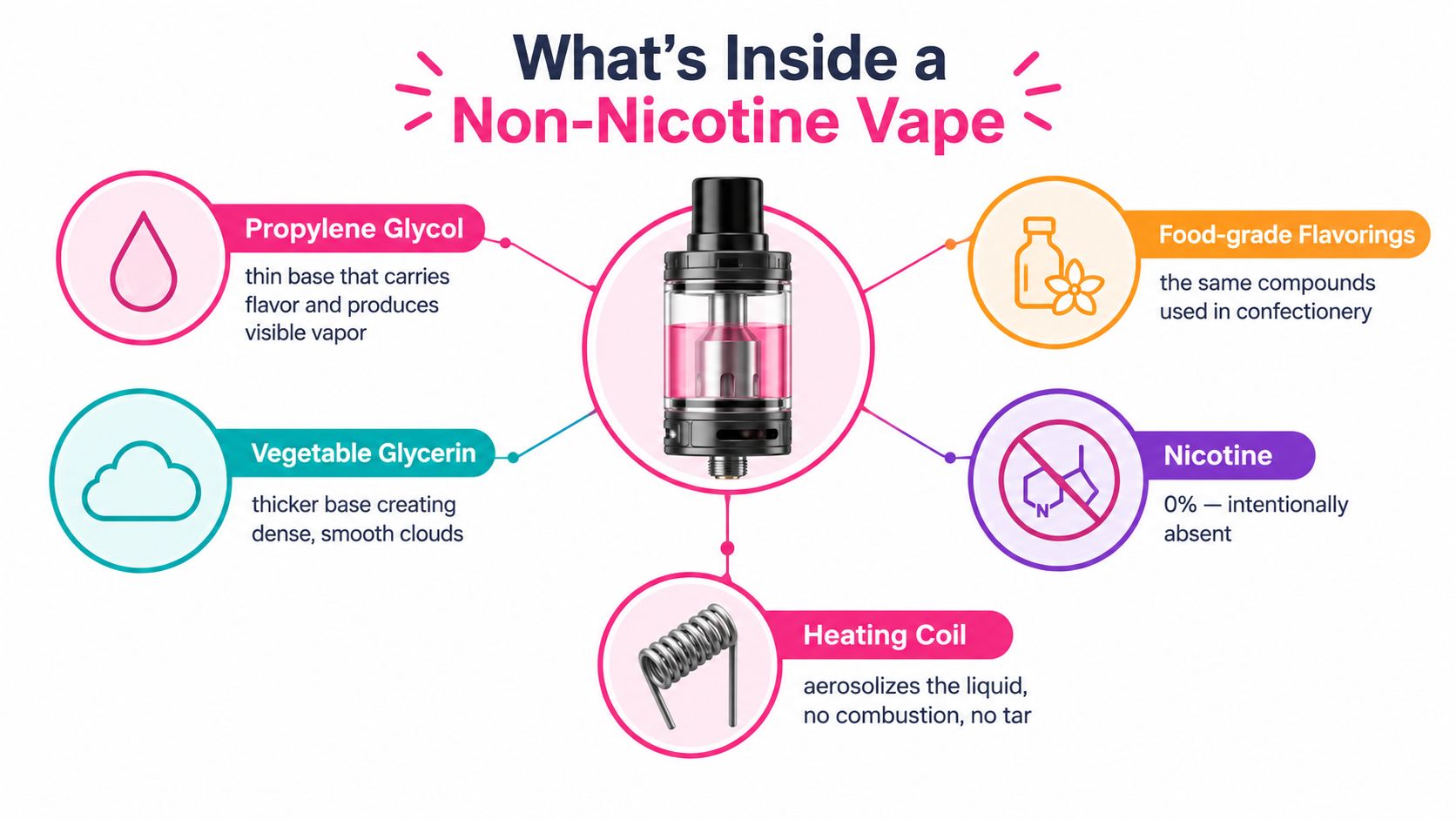
The same logic shows up in other product guides too, including broader flavor-oriented resources like HempWell USA's, where ingredient handling and device behavior also matter. The lesson is consistent across categories, liquid composition is only half the story.
Why hardware details matter
Hardware changes the experience even when nicotine is absent. A well-regulated device tends to keep heat more consistent, while a weak or poorly maintained coil can make the draw taste scorched or overly sharp. Adults comparing products should look for clear operating specs and avoid pushing a device beyond what the manufacturer intended.
The same principle applies to category guides, including the hookah flavor guide from Pink Smoke Shop, where heat management shapes flavor quality. The point isn't that every product is dangerous, it's that 0% nicotine only answers one question.
Comparing 0% and Nicotine Formulations
A lot of adult shoppers want a side-by-side answer. The difference between 0%, 3%, and 5% is not only strength, but how the draw feels and how much of the sensation comes from nicotine itself. As the retail data above showed, zero nicotine stayed a niche segment, which is why the comparison below is about experience, not market size.
Vaping Experience by Nicotine Strength
| Feature | 0% Nicotine | 3% Nicotine | 5% Nicotine |
|---|---|---|---|
| Throat feel | Softer, less bite | Noticeable nicotine presence | Stronger nicotine presence |
| Flavor emphasis | Flavor can feel more prominent | Balanced flavor and throat feel | Nicotine may shape the overall draw more strongly |
| Sensory feedback | Less nicotine-driven satisfaction | Moderate feedback | Higher feedback |
| Hardware | Often identical to other strengths | Often identical to other strengths | Often identical to other strengths |
| Best fit | Adults wanting no nicotine | Adults wanting lower nicotine | Adults preferring higher nicotine |
That table is about user experience, not a promise that every brand behaves the same way. A 0% device can still feel different from another 0% device because the coil, airflow, and liquid blend change the result. The same is true for 3% and 5% versions of the same model.
A longer draw makes the difference easier to notice. On a 0% device, the vapor often tastes cleaner and more flavor-forward, but it may feel flatter because there is no nicotine bite at the back of the throat. On a 5% device, the same draw usually feels firmer and more noticeable, with nicotine contributing more to the overall sensation.
Understanding 3% Nicotine Options
For adults comparing different nicotine strengths, 3% nicotine (30 mg/mL) offers a lower nicotine concentration than 5% (50 mg/mL), while still containing nicotine. One example is the HQD GO 35K Puffs 3% Nicotine, which is available at Pink Smoke Shop. This device is advertised to deliver up to 35,000 puffs, although actual puff counts vary depending on individual usage habits and device settings. The 3% option provides an alternative for adults who prefer a lower nicotine concentration than 5%, while keeping in mind that nicotine is addictive and individual experiences can vary.
What usually changes for the user
Without nicotine, some adults notice that flavor seems sweeter or more direct. Others take longer or more frequent draws because the missing nicotine bite changes the rhythm of the session. Those are sensory differences, not universal rules, but they are common enough to expect before buying.
The practical comparison is simple. Do you want the hand-to-mouth routine and flavor format without nicotine, or do you still want nicotine feedback in the draw? That answer usually matters more than puff count or branding.
A specific example from the market is the HQD Cuvie Plus 2.0 9k puffs Disposable Vape (0% - 2% Nicotine) which shows how the same device family can be offered in different nicotine formulations. For adults comparing models, that kind of product-page clarity is more useful than vague marketing copy.
Practical Use Cases for Adult Vapers
A zero-nicotine device makes sense when the buyer already knows which part of vaping they want to keep. Some adults want the hand-to-mouth routine without nicotine. Others want flavor-first sessions where nicotine does not shape the draw as much. Both are practical reasons to look at non nicotine e cigs.
Common adult reasons to choose 0%
The first use case is routine fit. A nicotine-free device can preserve the familiar format of a vape session while keeping nicotine out of the mix. That is a purchase choice, not a claim that the device is automatically safer.
The second use case is flavor focus. In a nicotine-free product, dessert, fruit, and beverage profiles can come through more clearly because nicotine is not adding its own bite to the draw. That is why many adults compare 0% products on taste consistency first and throat feel second.
A concrete option in this category is the HQD Quit Zero nicotine 15000 Puffs Disposable Vape which pairs a familiar device format with a 0% formulation.
The useful question is not “is it nicotine-free?”, it is “what experience am I trying to keep, and what am I willing to give up?”
A simple way to decide
- Check the nicotine line first. The listing should state 0% clearly, not hide it in fine print.
- Look for the manufacturer name and batch or lot code. Those details help you judge whether the product page is specific or vague.
- Read the flavor and hardware notes together. A strong flavor profile can still feel weak if the coil or airflow setup is basic.
- Confirm what comes in the package. Device count, charging details, and any included accessories should be spelled out before you buy.

For adults comparing options across a shop catalog, that checklist is usually more useful than chasing the biggest number on the package. Product pages should give enough detail to show whether a device fits your routine, rather than making you guess from marketing language.
The practical side is straightforward. If you want nicotine-free flavor use, compare hardware and listing details the way you would compare any other product with a moving part, because 0% on the label does not tell you everything about how the device will feel.
Navigating Labeling Accuracy and Verification
A 0% label is helpful, but it isn't the same thing as independent proof. Chemical testing has shown that products marketed as nicotine-free can still contain nicotine, which is why careful shoppers should treat packaging as a starting point rather than the final word. The CDC-hosted technical document also notes a brand labeled 0 mg that tested with results from 0.07 mg to 21.8 mg nicotine, which is exactly the kind of gap that makes verification important.
What to check before buying
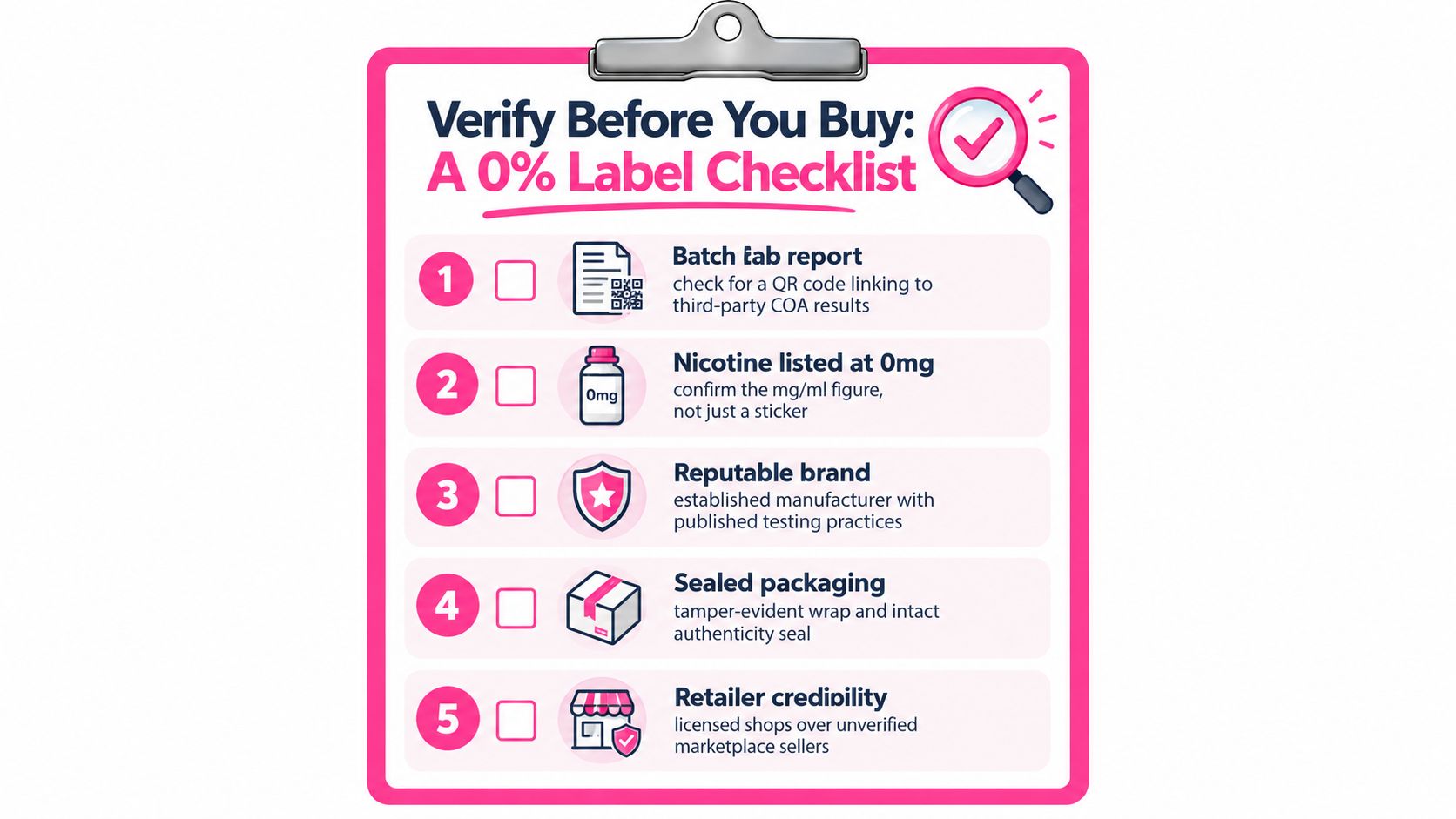
The most useful habit is to read the product information like a verifier, not a browser. Look for batch or lot details, a clear manufacturer name, and some kind of testing reference when it's available. If a product only offers a slogan and no documentation, that's a weaker signal than a page that distinguishes between tested results and marketing language.
Independent testing is especially important because labeling quality varies. A 2025 chemical-analysis study of 407 disposable e-cigarettes found nicotine in 396 samples, or 97.3%, and only 11 devices, or 2.7%, were identified as nicotine-free. The same study found that only 21 devices, or 3.5%, displayed a nicotine-concentration label, and none of the 18 products marked “5%” that were chemically analyzed fell within the study's stated accuracy criterion. Those findings don't mean every product is mislabeled, they show why buyers need documentation, not assumptions. Chemical analysis study of disposable e-cigarettes
Buy the documentation, not the sticker. If the claim matters to you, look for evidence that the finished product was actually checked.
The difference between “tested below detection limit” and “proven zero” also matters. Those phrases are not interchangeable, and a responsible retailer should be able to explain what a test did and didn't measure. That's one reason good product-spec templates.
A shop page that clearly identifies the brand, batch details, and packaging status gives a buyer more to work with than a vague listing. That's especially important in a category where similar-looking products can differ in contents.
Legal Requirements and Retail Compliance
A 0% nicotine product still belongs in a regulated retail environment. In the United States, Tobacco 21 sets the minimum sales age at 21 for tobacco products, including e-cigarettes and electronic nicotine-delivery systems, and the law took effect on December 20, 2019. The FDA also says retailers should check photo ID for customers who appear younger than 30, and the same retail guidance prohibits free samples and restricts certain vending-machine sales. FDA Tobacco 21 overview and FDA retail sales final rule summary
What compliance looks like in practice
A compliant shop doesn't treat nicotine-free as age-free. The checkout process still asks for ID, and a well-run store still keeps retail controls in place because product classification and local rules matter more than a single label. That's true online too, where age verification is part of the sale.
Federal rules also shape how products are marketed and documented. FDA materials say e-cigarettes and other electronic nicotine-delivery systems became subject to FDA tobacco authorities on August 8, 2016, and they note that after July 13, 2022, a non-tobacco nicotine product can legally be marketed in the U.S. only if it has received an FDA marketing granted order. For nicotine-free products, the key point is narrower, these rules don't mean every 0% item is automatically covered the same way, but they do show why sellers need to classify products carefully. FDA tobacco authorities and marketing order guidance
Reputable retail doesn't guess at compliance. It verifies age, checks product category, and keeps the listing aligned with the actual item.
For adult customers, that means buying through a shop that treats compliance as part of product quality, not as an afterthought. A nicotine-free device is still an adult product, and the retailer should act like it.
Pink Smoke Shop carries adult-focused vape and hookah products, including nicotine-free options where available, with product pages built to show the device details that matter most to shoppers. If you want to compare non nicotine e cigs by brand, format, and labeling clarity, visit Pink Smoke Shop and review the current product pages before you buy.